California to
Indiana movers
from $2,646
We move households between California and Indiana, in either direction. The table below prices the main city pairs, and the calculator prices any two addresses the same way.
- Miles
- 2,142–2,364
- Days, pickup to delivery
- 6–14
- City pairs priced
- 6
- Operating authority
- USDOT 3795167
California → Indiana
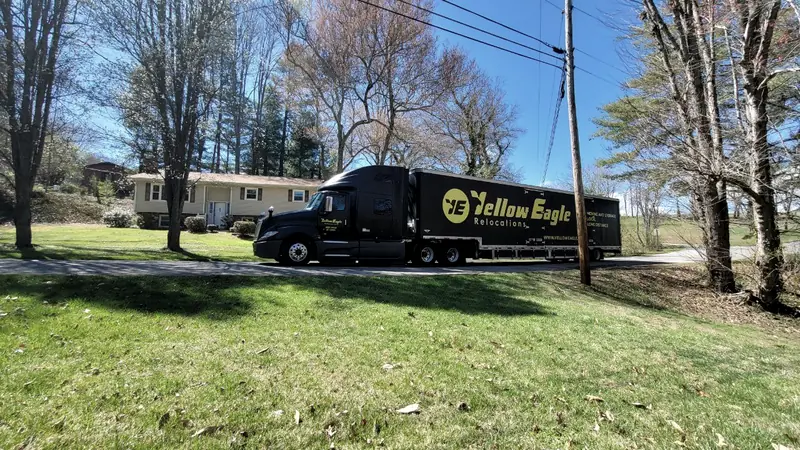
We run our own trucks and our own crews
USDOT 3795167 · licensed for household goods across state lines · ask us who is carrying your shipment and we will tell you
Los Angeles, CA to Indianapolis, IN
2,167 miles, 6–14 days. Standard access at both ends: no long carry, no shuttle truck.
| Home size | Typical range |
|---|---|
| Studio | $2,651–$4,923 |
| 1 bedroom | $3,372–$6,262 |
| 2 bedrooms | $4,352–$8,082 |
| 3 bedrooms | $5,275–$9,797 |
| 4 bedrooms | $6,330–$11,756 |
Between California and Indiana
A three-bedroom home. The same price applies in the other direction.
| From and to | Miles | Days | 3-bedroom home |
|---|---|---|---|
| Los Angeles, CA to Indianapolis, IN | 2,167 | 6–14 | $5,275–$9,797 |
| San Diego, CA to Indianapolis, IN | 2,142 | 6–14 | $5,265–$9,779 |
| Los Angeles, CA to Fort Wayne, IN | 2,239 | 6–14 | $5,305–$9,851 |
| San Jose, CA to Indianapolis, IN | 2,311 | 6–14 | $5,333–$9,905 |
| San Diego, CA to Fort Wayne, IN | 2,221 | 6–14 | $5,297–$9,837 |
| San Jose, CA to Fort Wayne, IN | 2,364 | 6–14 | $5,355–$9,945 |
A carrier, not a broker
Much of what comes back from a search for California to Indiana movers is a broker: it sells your move to a carrier you have never spoken to. We hold the authority, so one company quotes your move and the same company is responsible for it from pickup to delivery.
USDOT 3795167
Active for household goods. Check it in the federal register before you pay anybody — ours or theirs.
One company, start to finish
From pickup to delivery, one company is responsible for your move: ours.
A range, not an estimate
Under 49 CFR 375 an estimate is a written document made after a survey, and it binds us. Nothing here has seen your things.
What moves the price
How much you're moving matters most. The 2,167 miles matter less than most people expect. A shipment twice the size costs close to twice as much, while twice the distance adds only a fraction of that. That's because a long-distance truck carries several households at once: you pay for your share of the trailer and the labor at both ends, and loading and unloading take just as long whatever the drive.
Access comes next, and it's where surprise charges usually come from: stairs at either end, an elevator too small for a sofa, a long walk from where a big truck can legally park, or a street that needs a smaller shuttle truck. None of these are unusual, and all of them take extra labor. A mover who hasn't asked you about them hasn't finished pricing your move.
Then there's timing. October through April is the quiet half of the year, and June and July are the busiest months across the industry. Mid-month is easier to book than the first or last few days, when most leases end.
Everything else — packing, a piano or a gun safe, storage between dates, extra valuation coverage — is priced separately and should show up as its own line. If a mover gives you one number with no breakdown, ask for one.
How delivery actually works
A household move doesn't travel like a package. A long-distance trailer carries several shipments and plans its route around all of them, so you get a delivery window rather than a single date. On this route that's usually 6 to 14 days from pickup.
Federal rules require the mover to put that window in writing and to tell you if it's going to be missed. Ask for it before you book. If a company won't put it on paper, take note.
Be careful with a guaranteed date offered casually over the phone. If it isn't in the paperwork, it isn't a promise.
Why this is a range and not a quote
The size of a home doesn't tell you how much is in it. Two families in identical apartments can own three times as much as each other, and a website can't see which one you are. So the number here is a range, and it's wide on purpose: home size alone gives about ±30%, and a room-by-room list of what's coming narrows it to about ±15%.
Under federal rules, an estimate is a written document the mover prepares after seeing what you're moving, and it holds the mover to a number. On a binding estimate, you pay that number. On a non-binding one, the mover can require at most 110% of it at delivery. A number from a website doesn't count as an estimate, which is why we don't call it one.
The written estimate comes after a survey. A short video walk-through on your phone is enough; the FMCSA accepts it instead of an in-home visit.
Settle these before you pay anyone
Get the estimate in writing and check which kind it is. A binding estimate is the price you pay. A non-binding one can go up, but at delivery the mover can require no more than 110% of it. Some movers also offer a not-to-exceed price, which can only come in lower.
Ask what happens if you add things after the estimate. Under 49 CFR 375.403, before loading, the mover has to confirm the original estimate, give you a new signed one, or agree in writing to treat it as non-binding. If they start loading without doing one of those, the original estimate stands, and they can only charge extra for services you specifically asked for.
Ask what your valuation coverage is. The legal minimum is 60 cents per pound per item, which for a 50-pound TV comes to $30. Full value protection costs extra, and it's worth understanding before the move, not after.
Ask for the delivery window, the deposit and the cancellation terms in one written document, not three answers over the phone.
How a low price turns into a big billMoving between California and Indiana
- How much does it cost to move from California to Indiana?
- A studio starts around $2,646. A three-bedroom home from Los Angeles, CA to Indianapolis, IN typically runs $5,275 to $9,797. How much you own moves the price far more than which two cities you pick, which is why the range is wide until somebody has seen your things.
- How long does a move from California to Indiana take?
- Los Angeles, CA to Indianapolis, IN is 2,167 miles and usually 6 to 14 days from pickup to delivery. Between other cities in the two states it runs 6 to 14 days. Long-distance trucks carry more than one shipment, so delivery is a window rather than a date, and you should get that window in writing before you book.
- Does moving from Indiana to California cost the same?
- Yes. The way we price a move, the distance and the volume set the number, so the return trip between the same two cities is the same distance, the same delivery window and the same range.
- Are you a carrier or a broker?
- A carrier. We hold our own operating authority, USDOT 3795167, MC-1363846, and you can check it in the FMCSA register before you pay anybody. One company quotes your move and is responsible for it from pickup to delivery.
- How do I get a written estimate?
- Start with the range on this page or in the calculator. Then we do a free video walk-through of your home on your phone and give you a written estimate before you commit to anything. The number on this page is a range, not an estimate: nothing has seen your belongings yet.
Long distance movers in California and Indiana
Other states we move between
- California to Arizona
- California to Colorado
- Massachusetts to California
- California to Georgia
- Texas to California
- California to Florida
- California to North Carolina
- California to Tennessee
- California to New York
- California to Ohio
- California to Utah
- California to Virginia
- California to Michigan
- California to Vermont
- California to Pennsylvania