Long distance movers
in San Francisco
from $2,296
We move people out of San Francisco to anywhere in the lower forty-eight. The 2 routes below are the ones we publish a price for; the rest are a phone call away.
- Routes priced here
- 2
- States we serve
- 48
- Operating authority
- USDOT 3795167
- Interstate moves a week
- 25
San Francisco → New York City
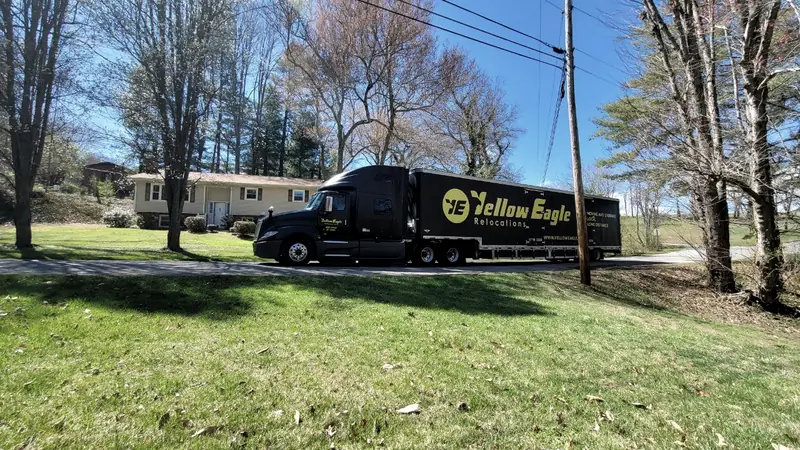
We run our own trucks and our own crews
USDOT 3795167 · licensed for household goods across state lines · ask us who is carrying your shipment and we will tell you
A carrier, not a broker
Most of what comes back from a search for movers in San Francisco is a broker: it sells your move to a carrier you have never spoken to, and the price moves once somebody finally sees your things. We hold the authority, so there is one company on the paperwork and it is the one with the truck.
USDOT 3795167
Active for household goods. Check it in the federal register before you pay anybody — ours or theirs.
One company, start to finish
The crew that loads your shipment is the crew that delivers it — see how a move actually runs on our how-it-works page.
A range, not an estimate
Under 49 CFR 375 an estimate is a written document made after a survey, and it binds us. Nothing here has seen your things.
Where we go from San Francisco
Every route below is one we publish a price for. Off-peak ranges with standard access at both ends; June and July add around 15%.
| Destination | Miles | Days | 3-bedroom home |
|---|---|---|---|
| New York City, NY | 3,079 | 8–18 | $5,643–$10,481 |
| Los Angeles, CA | 417 | 2–6 | $4,570–$8,486 |
What moves the price out of San Francisco
How much you own, not how far you go
Volume is the bigger lever by a wide margin. A shipment twice the size costs roughly twice as much; twice the distance adds a fraction of that, because the truck is making the trip anyway with other people's furniture.
Getting the truck to the door
Stairs, a lift that fits a sofa, how close a full-size truck can park, and whether the street needs a smaller shuttle truck. These are the questions we ask about San Francisco before quoting, and they are where a surprise charge usually comes from.
The month you pick
October to April is the quiet half of the year. June and July are the peak, and the same shipment can cost 15 to 20% more. Mid-month beats the first and last few days.
Carrier or broker, and how to tell
Most of what a search for movers returns is a broker. A broker sells your move to a carrier you have not spoken to, takes a deposit, and is not the company that shows up. That is a legal business and some brokers are good at it — but it explains the complaint that defines this industry, where the price rises on delivery day and the company that quoted it is not the company holding your furniture.
We hold our own operating authority: USDOT 3795167, MC-1363846, active for household goods. One company quotes the move out of San Francisco, one company is responsible for it, and it is the same one.
The check takes a minute and you should run it on anybody, including us. Look the USDOT number up in the FMCSA register, confirm it is active and authorised for household goods, and see how long it has been. Then never pay a mover in cash or by wire transfer, and never pay anything before the estimate is in writing.
What moves the price
Volume is the lever, by a wide margin. Distance matters less than most people expect. A shipment twice the size costs close to twice as much; twice the distance adds a fraction of that. The reason is in how a long-distance truck works: it is making the trip anyway, with several households aboard, and what you are buying is your share of the trailer plus the labour at both ends. Loading and unloading do not get cheaper because the drive is shorter.
Access is the second lever and the one that produces surprise charges. Stairs at either end, a lift too small for a sofa, a long walk from where a full-size truck can legally park, a street that needs a smaller shuttle truck to feed the big one. None of these are unusual and all of them are labour. Any mover who has not asked about them has not finished quoting.
The month is the third. October through April is the quiet half of the year; June and July are the industry's peak everywhere in the country, and the same shipment costs meaningfully more in them. Mid-month beats the first and last few days, because leases turn over at the ends.
Everything else — packing materials, a piano or a gun safe, storage between dates, valuation coverage above the legal minimum — is priced as itself and should appear as its own line. A single number with no breakdown is not a price, it is a hope.
How delivery actually works
Household goods do not travel like parcels. A long-distance trailer carries several shipments and routes itself around all of them, so delivery is a window rather than a date. On a long haul that is usually one to three weeks from the day it is collected.
Federal rules require the carrier to give you that window in writing and to tell you if it is going to be missed. Ask for it before you book, not after — a company that will not commit the window to paper is telling you something.
What you should not accept is a guaranteed date offered casually on the phone. Either it is in the paperwork with terms attached, or it is a sentence somebody will not remember saying.
Why this is a range and not a quote
Floor area does not decide what a move weighs. Two households in identical apartments can differ by a factor of three, because one of them has been collecting for thirty years — and a website cannot see the difference. So the figure here is a band, and it is wide on purpose: home size alone gives about ±30%, and a room-by-room list of what is actually coming narrows it to about ±15%.
Under federal rules an estimate is a specific thing: a written document, built on the carrier's tariff, after somebody has seen the shipment. It binds. A carrier must release your things for 100% of a binding estimate, or 110% of a non-binding one. Nothing you can generate on a website qualifies, and a company that calls its web figure an estimate is either careless with the word or hoping you are.
The number that does bind comes after a survey — a short video walk-through on your phone is enough, and the FMCSA accepts it in place of somebody standing in your living room.
Settle these before you pay anyone
Get the estimate in writing and check which kind it is. Binding, not-to-exceed and non-binding are three different promises, and federal rules entitle you to ask for the first two rather than accept the third.
Ask what happens if you add things after the estimate. Under 49 CFR 375.403 a carrier must, before loading, either reaffirm the estimate, issue a new signed one, or agree in writing to treat it as non-binding. If loading starts without one of those, the original estimate stands and no extra can be collected except for services you specifically asked for.
Ask what the valuation coverage actually is. The legal minimum is 60 cents per pound per article, which on a television is not compensation — it is a rounding error. Full value protection costs money and is worth understanding before, not after.
Ask for the delivery window, the deposit terms and the cancellation terms in the same document. Three separate verbal answers are not terms.
Moving out of San Francisco
- How much do long distance movers cost in San Francisco, CA?
- An interstate move out of San Francisco, CA starts around $2,296 for a studio and runs to the middle five figures for a large home going coast to coast. Volume moves the price far more than distance does — a shipment twice the size costs roughly twice as much, while twice the miles adds a fraction of that.
- Are you a carrier or a broker?
- A carrier. We hold our own operating authority — USDOT 3795167, MC-1363846 — and you can check it in the FMCSA register before you pay anybody. A broker sells your move to a carrier you have not met, takes a deposit and is not the company that shows up. We are the company on the paperwork and the company that moves you.
- How long does an interstate move from San Francisco, CA take?
- It depends on the distance. San Francisco, CA to New York City, NY is 3,079 miles and usually 8 to 18 days from pickup to delivery. Long-distance trucks carry more than one shipment, so delivery is a window rather than a date — ask for that window in writing before you book.
- When is the cheapest time to move out of San Francisco, CA?
- Between October and April. Demand peaks in June and July, when the same shipment can cost 15 to 20% more than in winter. Mid-month beats the first and last few days of it.
- What can go wrong with the price?
- The usual story is an estimate given without anybody seeing the shipment, which grows on delivery day. Federal rules entitle you to a binding or not-to-exceed estimate in writing on request, and with a non-binding one a carrier may collect no more than 110% of it at delivery. The number on this page is a range, not an estimate: nothing has seen your belongings yet.